

Short answer: most SIP garden room projects need a flat, level, square and load-bearing base before the SIP kit is installed. The best option depends on the site, the intended use, ground conditions, drainage, access and whether Building Control or an engineer is involved.
For many customers, the SIP kit itself is the part they can see and understand: walls, roof panels, splines, fixings, membrane, roof covering and openings. The base is less exciting, but it is one of the most important parts of the whole project. A good base makes the SIP shell easier to assemble, keeps the building square, protects the panels from moisture risk and reduces problems later. A poor base can cause racking, awkward panel alignment, door and window issues, water pooling and installation delays.
This guide explains the main foundation and base options for SIP garden rooms in the UK, when each one tends to make sense, and what information UltraSIPs needs before manufacturing your kit.
Quick comparison: which base is best for a SIP garden room?
| Base type | Best for | Main advantages | Things to check |
|---|---|---|---|
| Concrete slab | Permanent garden rooms, gyms, offices, studios and heavier structures | Solid, predictable, good bearing surface, easy to set out accurately | Drainage, damp protection, levels, access for concrete, curing time |
| Ground screws | Sloping gardens, restricted access, lighter garden rooms and sites where digging is awkward | Fast installation, less excavation, useful where concrete access is difficult | Ground suitability, screw layout, structural design, timber or steel frame above |
| Timber base | Smaller outbuildings, budget builds and sites where a raised platform is useful | Can be cost-effective and adaptable | Ventilation, durability, deflection, moisture, support spacing and ground contact |
| Engineered foundation | Annexes, habitable rooms, large spans, poor ground, clay, trees, drains or Building Control projects | Designed around the actual loads and site conditions | Requires engineer/building control input before manufacture |
Why the base matters more with SIP panels
SIP panels are manufactured to form a planned shell. The panels are designed to sit in the correct position, meet at the correct corners, and line up with the roof, openings and any floor system. If the base is not level or square, the SIP kit has to fight against the base from the first panel.
A SIP garden room base should normally be:
- Level: so wall panels sit evenly and roof panels do not need to compensate for the base.
- Square: so opposite walls and corners line up with the panel schedule.
- Flat: so there are no high spots lifting panels or low spots collecting water.
- Designed for load: so it can support the SIP shell, roof covering, internal use, furniture, people and any additional loads.
- Protected from moisture: so the sole plate and panel edges are not left sitting in water.
- Accessible: so installers, panel handling and delivery logistics are realistic.
UltraSIPs can manufacture the SIP shell, cut openings to suit your confirmed dimensions and help you understand the information needed for the kit. Groundworks, foundation design and site preparation are normally handled by the customer, builder, groundworker or engineer unless separately agreed in writing.
Option 1: concrete slab
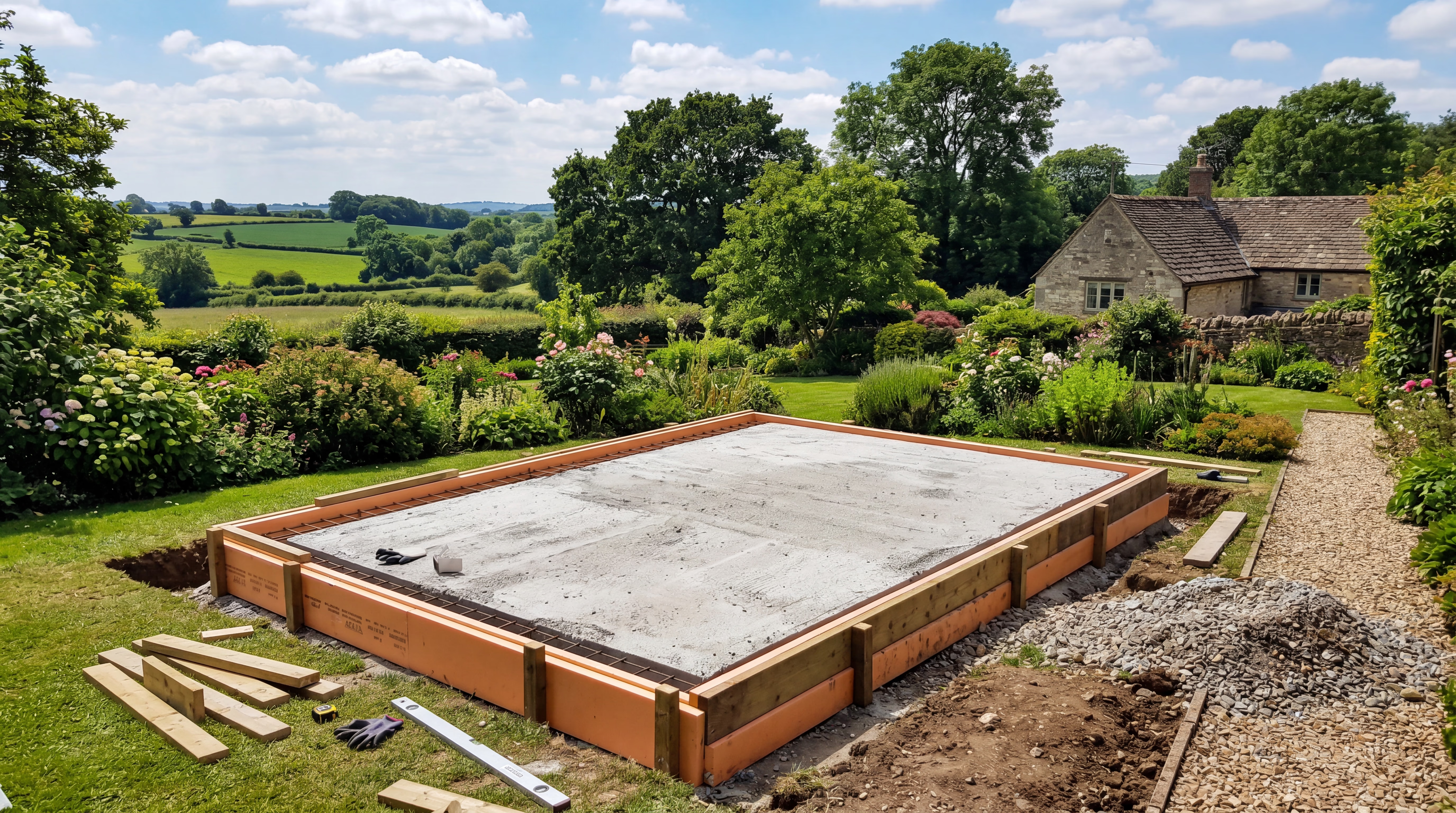
A concrete slab is often the most familiar base option for a garden room. It gives a solid, continuous platform and can be a good choice where the structure is intended to be permanent, used year-round, or fitted out as an office, gym, studio or garden building with heavier contents.
A well-installed slab can make the SIP installation simpler because the wall line can be set out clearly and the base gives consistent support. For SIP kits, the key point is not just that the slab exists, but that it is the right size, level, square, dry enough for follow-on work and detailed so water is not driven back into the building.
Concrete slab advantages
- It provides a stable platform for the SIP shell.
- It is familiar to most builders and groundworkers.
- It can work well with larger garden rooms and heavier internal use.
- It can make setting out sole plates and panel positions more straightforward.
- It can help with a clean, durable finished threshold if detailed correctly.
Concrete slab checks
- Confirm the exact outside dimensions before pouring.
- Check whether the slab should be the same size as the SIP footprint, slightly proud, or detailed with a separate plinth/edge design.
- Plan surface water drainage so water does not sit against the SIP sole plate.
- Allow for damp-proofing and separation between timber/SIP components and the concrete.
- Check the slab is level and square before panels are manufactured or installed.
- Consider service entries before the concrete is poured.
The Planning Portal foundation guidance explains that foundations need to transfer building loads safely to the ground and that the correct foundation can vary by project circumstances. That is why a slab should not be treated as "one size fits all" where the site has unusual ground, trees, clay, nearby drains or a heavier building.
Option 2: ground screws
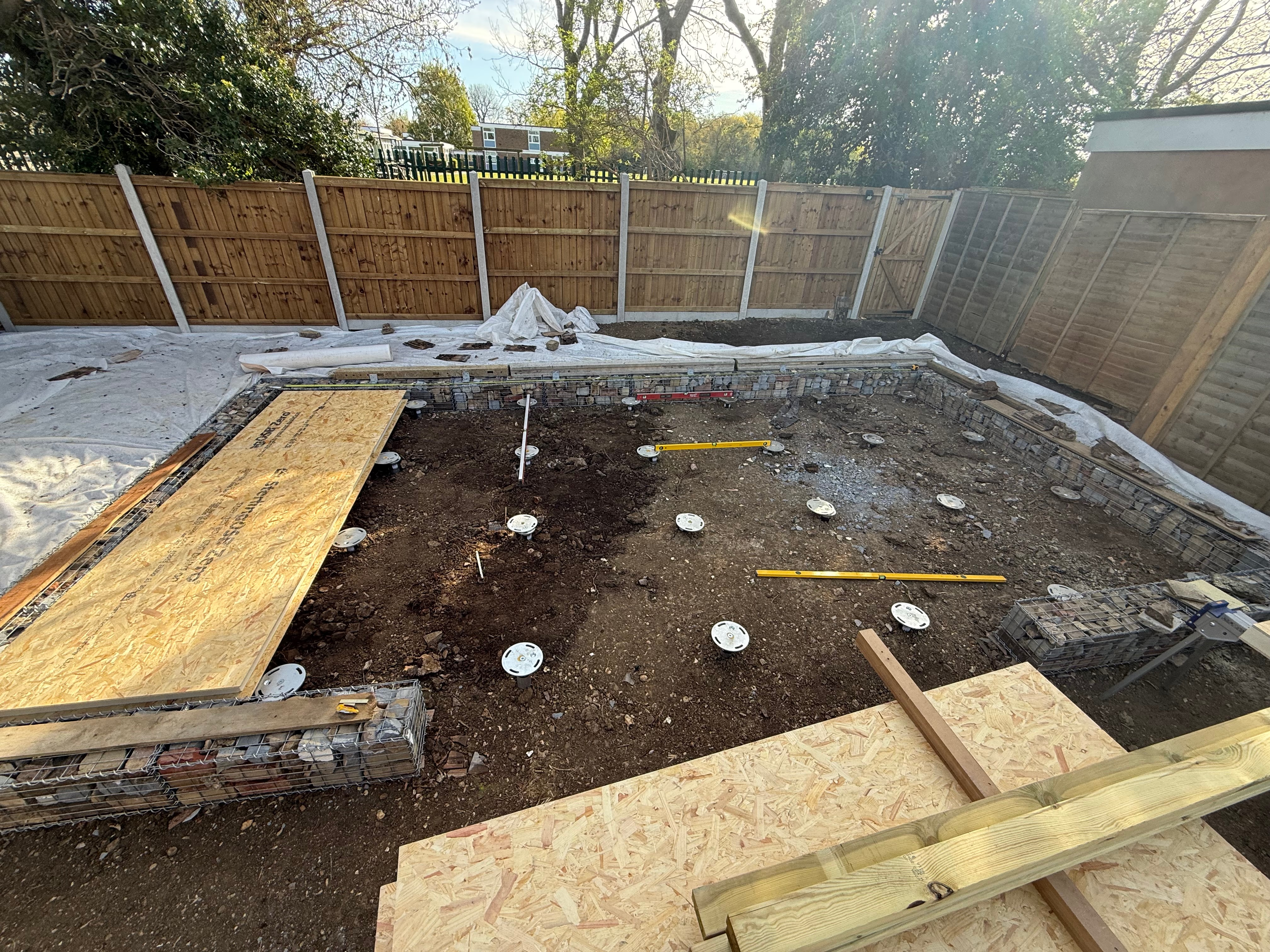
Ground screws can be a useful alternative where access is limited, excavation is awkward, the garden slopes, or the customer wants to reduce wet trades on site. Instead of pouring a full slab, a grid of screws supports a timber or steel frame, and the SIP building sits above that structure.
For SIP garden rooms, the important point is that the screws themselves are only part of the system. The frame above them must be designed and set out correctly so the SIP kit has a flat and square platform. If the frame flexes, twists or is not properly braced, the building can still suffer from alignment problems.
Ground screw advantages
- Less excavation than many concrete foundation options.
- Often useful on sloped gardens where a raised platform is needed.
- Can be quicker to install once the layout is confirmed.
- Can reduce mess and spoil removal.
- Useful where ready-mix concrete access is difficult.
Ground screw checks
- The screw installer should confirm ground suitability.
- The screw grid needs to suit the load path of the building and frame above.
- The frame needs to be level, square, braced and stiff enough for the SIP shell.
- Drainage and airflow below the building still need to be considered.
- Any Building Control or engineer requirements should be checked before ordering.
Ground screws can be a good solution, but they still need proper setting out. If the final screw/frame layout changes the floor height, threshold or outside dimensions, tell UltraSIPs before manufacture so the SIP kit is based on the final arrangement.
Option 3: timber base
A timber base is often used for smaller garden rooms, budget-conscious projects or sites where the customer wants a raised platform. It can be practical, but it needs more care than many people expect.
The main risks with timber bases are movement, moisture and deflection. If the base is not stiff enough, the SIP shell can move. If timber is close to wet ground or has poor ventilation, long-term durability becomes a concern. If the support spacing is wrong, the floor can feel bouncy and internal finishes may suffer.
Timber base advantages
- Can be cost-effective for smaller garden buildings.
- Can work with uneven sites when supported correctly.
- Can be easier to alter before the SIP kit arrives.
- Can provide a raised floor zone for airflow and services.
Timber base checks
- Use timber suitable for external/support use.
- Keep structural timber out of standing water and direct ground contact unless specified for that use.
- Provide airflow below the floor zone.
- Make sure joist/support spacing suits the floor build-up.
- Check the base is square by measuring diagonals.
- Check the top of the base is level before the SIP kit is installed.
The Planning Portal flooring guidance notes that floors may need to provide structural support, resistance to ground moisture and thermal insulation. Even where Building Regulations approval is not required, those practical principles still matter if you want a comfortable and durable building.
When an engineered foundation is the safer route
Some projects should not be guessed from a simple garden room base rule. If any of the following apply, you should consider engineer or Building Control input before ordering the SIP kit:
- The building may be used as habitable accommodation, sleeping accommodation, an annexe or an extension.
- The building is large, unusually tall, heavily glazed or has wide openings.
- The site has clay soil, large trees nearby, recent tree removal, poor ground or made-up ground.
- There are drains, sewers, retaining walls or adjacent structures close to the proposed base.
- The building has heavy equipment inside, such as gym equipment, machinery, a golf simulator or large storage loads.
- The local authority, warranty provider, lender or designer has asked for structural calculations.
Planning Portal guidance highlights soil type, trees, drains, ground condition and the size/construction of the building as factors that can affect foundation design. In plain terms: the bigger, heavier or more sensitive the project is, the less sensible it is to rely on guesswork.
Does Building Control apply to a garden room base?
Sometimes yes, sometimes no. For small detached garden buildings, Building Regulations may not normally apply in certain circumstances, but the rules depend on floor area, sleeping accommodation, distance from boundaries, construction type and local factors.
The Planning Portal outbuilding guidance says small detached buildings under 15 square metres with no sleeping accommodation will not normally need Building Regulations approval. It also explains that buildings between 15 and 30 square metres may not normally require approval if they contain no sleeping accommodation and meet certain boundary or non-combustible construction conditions.
That does not mean every garden room can ignore structure or foundations. It simply means some projects may be exempt from the formal approval route. If the building will be slept in, used as habitable accommodation, connected as an extension, built close to a boundary, or treated as more than a basic outbuilding, check before you commit.
Planning permission is also separate from Building Regulations. The Planning Portal planning guidance for outbuildings sets out limits and conditions for permitted development, including height, location, designated land and listed building restrictions. A project can be acceptable from a planning perspective but still need good structural design, and the reverse can also be true.
What UltraSIPs needs before manufacturing your SIP kit
Before we manufacture a SIP garden room kit, we need clear and final information. The base affects the whole shell, so it is worth getting these details right before placing the order.
Useful information to send us
- Final outside dimensions of the building.
- Whether the SIP kit includes walls and roof only, or whether a SIP floor is also required.
- Base type: slab, ground screws, timber base, existing base or engineered foundation.
- Photos of the site, especially if access or levels are difficult.
- Finished floor level and threshold expectations.
- Any drawings from your designer, architect, groundworker or engineer.
- Door and window positions, especially bifolds, sliders and large glazing.
- Whether Building Control, planning permission or structural calculations are involved.
- Whether delivery access and offloading are straightforward.
If you are still at budget stage, you can use the UltraSIPs configurator to test sizes and options, or you can send us drawings, sketches or photos and we will help identify what assumptions the quote is based on.
Common base mistakes that delay SIP projects
1. Pouring the slab before the final SIP dimensions are confirmed
This can create problems if the building size changes later. Always work from the latest drawing or configurator output before committing to groundworks.
2. Assuming "near enough" is good enough
SIP kits are manufactured to dimensions. A base that is out of square can make everything harder: walls, roof panels, membranes, EPDM, cladding, doors and windows.
3. Forgetting water management
A base should not encourage water to sit against the building. Think about falls, drainage, splashback, ground levels and how water will move away from the structure.
4. Treating a timber base like internal joinery
A timber base is external structural work. It needs durability, ventilation, stiffness and good support. It should not be an afterthought.
5. Not checking services early
Electric, data, water or drainage routes can affect the slab or raised base. Decide where services will enter before the base is finished.
6. Ignoring access
Garden room projects often fail on logistics rather than panel supply. Check whether panels can be moved from the delivery point to the base, whether there is room to work around the building, and whether offloading has been arranged.
Base size: should it match the SIP footprint?
This depends on the chosen detail. Some projects use a slab or base that matches the external footprint. Others use a plinth, upstand, overhang, drainage channel or separate cladding zone. What matters is that the detail is agreed before manufacture.
If the base is larger than the building, make sure water cannot sit on the exposed ledge and track back into the sole plate or wall build-up. If the base is smaller than expected, you may not have enough bearing area for the SIP sole plate or floor structure. If cladding is being added later, allow for the cladding build-up, fixings and clearance.
Should you include a SIP floor?
Some garden room kits are walls and roof only, with the customer providing the base/floor separately. Other projects use SIP floor panels as part of the insulated envelope. A SIP floor can be useful where the building is raised, where better thermal performance is needed, or where the floor build-up is part of the designed shell.
If you are comparing prices, check whether the quote includes a floor. A cheaper quote may be walls and roof only. That is not automatically wrong, but it needs to be clear. On UltraSIPs garden room products, floors are sold separately unless specifically included in the selected package or quote.
Drainage and damp protection
SIP panels perform best when they are kept dry and detailed correctly. Moisture control starts at the base. The base should manage rainwater, ground moisture and splashback, while the wall build-up should include appropriate membranes, sole plate detailing and external finishes.
Practical checks include:
- Do not let soil or paving bridge above the intended damp line.
- Keep finished ground levels and splash zones in mind.
- Plan gutters and rainwater discharge before the roof is complete.
- Do not trap timber in unventilated wet areas.
- Check thresholds before ordering doors.
- Allow safe working space around the building for membrane, EPDM, cladding and trims.
What if you already have an existing slab?
An existing concrete slab can sometimes be reused, but it should be checked first. Do not assume that an old garage base, shed base or patio slab is suitable for a SIP garden room.
Check:
- Is it level?
- Is it square enough for the proposed building?
- Is it cracked, hollow, thin or badly settled?
- Does it drain correctly?
- Is it the correct size?
- Is the edge strong enough?
- Will finished ground levels cause damp issues?
If there is doubt, ask a builder, groundworker, engineer or Building Control before relying on it.
Foundation choice by project type
| Project type | Typical base direction | Comments |
|---|---|---|
| Small garden office | Concrete slab, ground screws or well-designed timber base | Keep the base flat, level and protected from moisture. |
| Garden gym | Concrete slab or engineered base | Heavy equipment can change the load assumptions. |
| Golf simulator room | Concrete slab or engineer-reviewed base | Higher internal space, equipment and openings may need more checking. |
| Annexe or habitable use | Engineer/Building Control-led foundation | Do not treat this as a simple shed-type garden room. |
| Extension | Engineer/Building Control-led foundation | Connection to the existing house and Part L/structure will matter. |
FAQs
Can I build a SIP garden room on paving slabs?
For a proper SIP garden room, loose paving slabs are rarely the right starting point unless they are part of a designed and supported base system. The building needs a stable, level and load-bearing platform, not just a surface that looks flat.
Can UltraSIPs design my foundation?
UltraSIPs can help with SIP kit dimensions, panel specification and build assumptions. Foundation design is normally by your builder, groundworker, architect, structural engineer or Building Control route unless separately agreed.
Do I need a structural engineer for a small garden room?
Not always. A simple small outbuilding may not need formal engineering, but you should seek advice if the building is large, habitable, close to boundaries, heavily glazed, on poor ground, near drains or trees, or if Building Control is involved.
Can I order the SIP kit before the base is built?
Yes, but the dimensions and assumptions need to be final. If the base size, floor height, roof design, openings or door thresholds change after manufacture, the SIP kit may no longer match the site.
What is the safest route if I am unsure?
Send us the planned dimensions, photos of the site, any drawings and the intended use of the building. We can help identify what needs confirming before manufacture and whether the project looks like a simple garden room or a design that needs more formal input.
Next step
If you are planning a SIP garden room, start with the intended use, footprint, roof type, openings and base type. Then either use the UltraSIPs configurator for a live starting point, or send your drawings and site photos to UltraSIPs for a practical review.
Please treat this guide as general information, not a substitute for project-specific structural, planning or Building Control advice. A good SIP kit starts with clear assumptions, and the base is one of the most important assumptions to get right.