

Choose your viewer type
Set your role once and we will tailor the guidance across SIP University.
Warm, dry rooms
SIPs solve most heat loss on day one, but only if air and moisture are controlled at the joints and ventilation is planned for the UK climate. UltraSIPS focuses on airtight seams, junction details, and ventilation strategy so rooms stay warm and dry.
Most performance issues come from air and moisture control, not panel choice, so this protects long-term results.
Building science in a SIP build
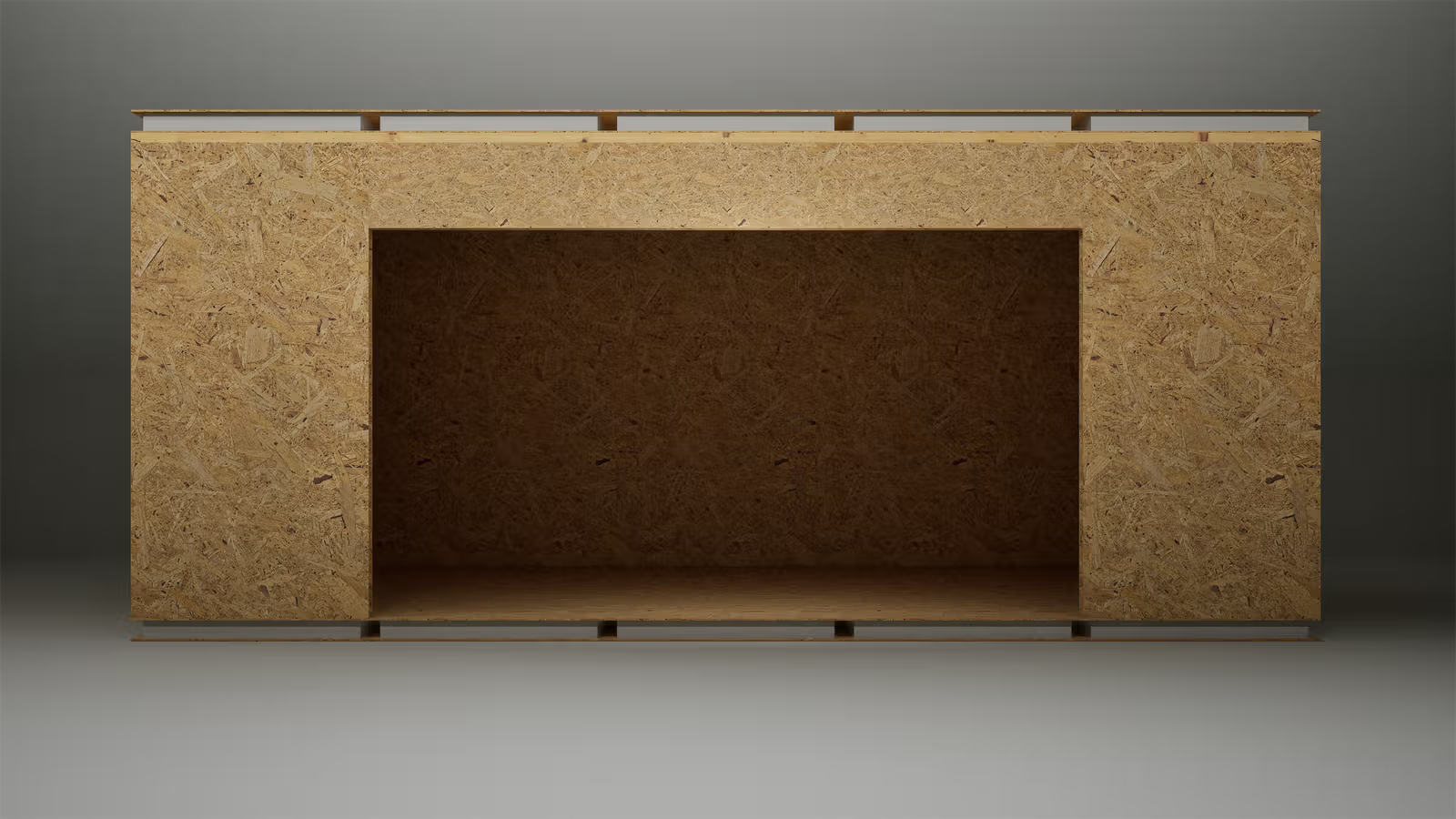
SIPs combine structure and insulation, so building science is not a separate layer you add later. It is baked into the panel, the joints, and the way the shell is closed. The decisions you make here determine long-term comfort, durability, and energy use.
The three forces at work
Heat, air, and moisture move together. If you control one but ignore the others, you still get problems.
Parameters worth checking early
- U-values and thermal bridge (Psi) values for junctions.
- Airtightness target (air permeability at 50 Pa).
- Surface temperature factors to avoid cold corners.
- Ventilation rates and strategy (MVHR, MEV, or passive).
- Moisture risk and dew point position in the build-up.
Heat transfer modes
Even a well-insulated panel can lose heat at the wrong junction. Know the modes and design the details.
Thermal bridges vs thermal voids
SIPs reduce thermal bridging, but details can reintroduce it.
Moisture movement: the real risks
Most moisture problems are not about vapour diffusion. They come from bulk water and air leakage.
Air movement drivers
Air moves because of pressure differences. The tighter the building, the more you must plan airflow.
Control layers: what does what
Good buildings separate the control layers and keep them continuous.
Junctions that matter most
Corners, wall-to-roof, wall-to-floor, and openings are where performance is won or lost.
Butt joints and splines
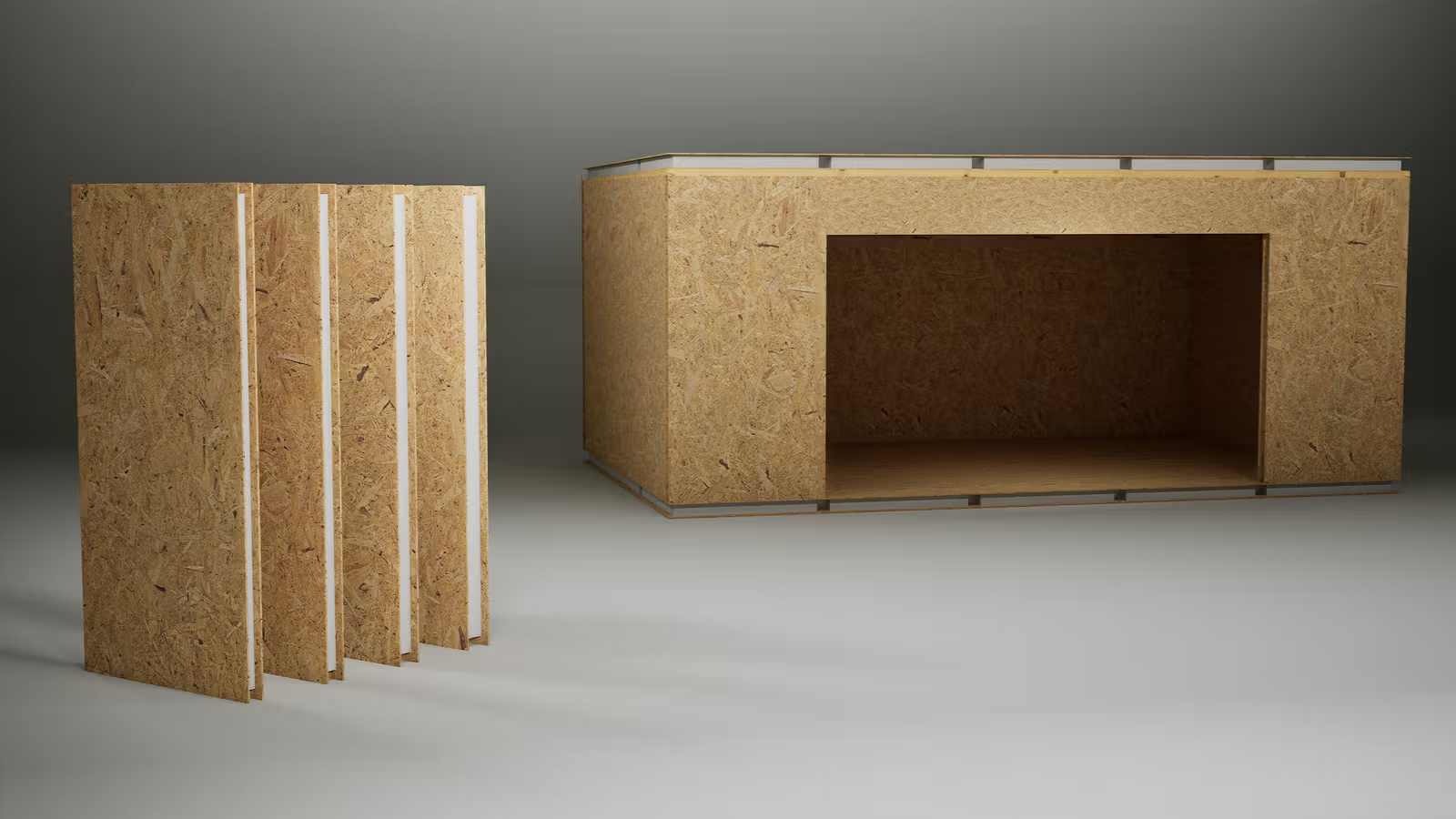
A butt joint can be reliable, but only when the sealing sequence is followed. Splines add structure and alignment, but they also add thermal bridging if left untreated. Detail the joint type, sealant, and fixings before the panels arrive.
Crawl spaces and ground moisture
Cold, damp subfloors can drive moisture into a SIP shell. If you are building over a crawl space, plan ground ventilation, vapour control, and insulation at the perimeter. Avoid direct timber contact with damp masonry.
Ventilation strategies
SIP shells are tight, so ventilation needs a plan from day one.
Back venting and cladding
Rain and wind are constant in the UK. The cladding build-up must allow drainage and drying.
Where these principles come from
These guidelines align with UK standards and best practice: Approved Document C and L, BS 5250, and manufacturer detail packs.
Building science checklist
- Keep insulation continuous at junctions.
- Seal joints before finishes go on.
- Plan ventilation early in design.
- Protect openings with flashing and drainage.
- Confirm vapour control strategy for the build-up.