

One of the easiest ways to keep a SIP build on budget is to be smart about windows and doors. A lot of customers assume they need to buy brand new glazing before they can order a SIP kit. In many cases, that is not true.
If you already have windows or doors, or if you find a good second-hand set locally, we can cut the SIP panel openings to the dimensions you give us. That means you can design your garden room, workshop, office, gym, studio, annexe-style outbuilding or storage building around the windows and doors you want to use, rather than being forced into buying everything new.
This can be a very practical way to reduce the total project cost, especially on budget-conscious builds where the main priority is getting a warm, strong and usable shell in place without overspending on extras.
You can supply the window and door dimensions
UltraSIPS can manufacture and cut openings to customer-supplied dimensions. If you tell us the exact sizes of the windows and doors you plan to use, we can allow for those openings in the SIP layout and panel schedule.
The important word here is exact. We need the overall frame size, not a rough guess and not just the size of the glass. For most windows and doors, that means measuring the full external frame width and height. If there is a sill, threshold, add-on profile, coupler or trickle vent, tell us about it before the panels are cut.
For best results, send us:
- The overall frame width in millimetres.
- The overall frame height in millimetres.
- Whether the size includes the sill or threshold.
- Photos of the front, back, sides and label if there is one.
- Whether the door opens in or out.
- The hinge side, viewed from outside.
- Any manufacturer drawing or order sheet if you have it.
- The position you want it on the wall.
If you are not sure, take photos with a tape measure in view and send them over. It is better to check twice than to cut a panel opening around the wrong assumption.
Where to find second-hand or surplus windows and doors in the UK
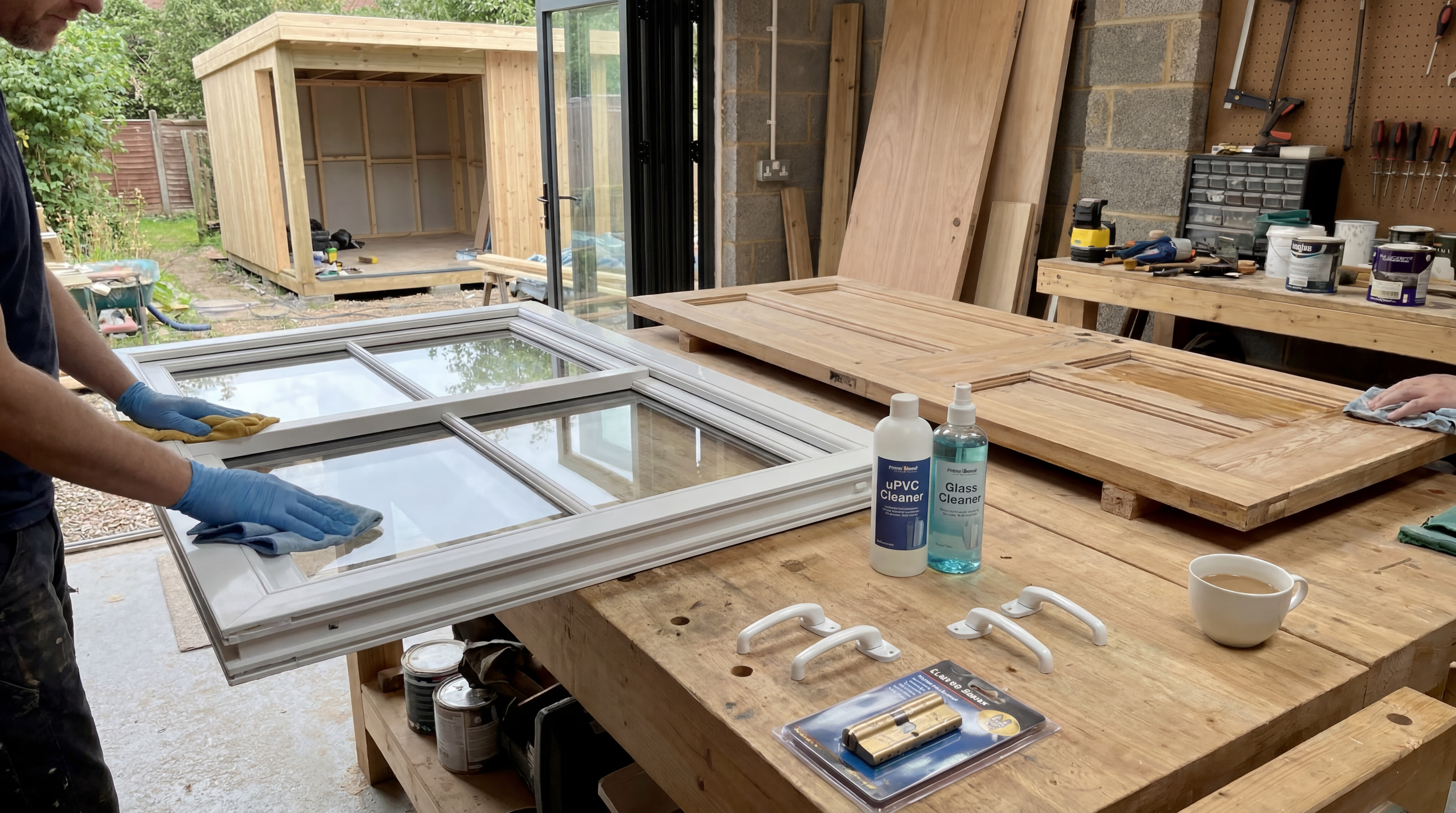
There is a big second-hand market for windows and doors in the UK. A lot of perfectly usable glazing is removed from homes during refurbishments, extensions, showroom clearances or order mistakes. If you are prepared to collect, measure carefully and do a bit of cleaning, there are real savings to be found.
Common places to look include:
- eBay - good for used uPVC windows, aluminium bifolds, composite doors, French doors and patio doors.
- Facebook Marketplace - often the best place for local collection, especially when someone has just removed windows during a house renovation.
- Gumtree - still useful for local used windows, doors, conservatory panels and surplus glazing.
- Local window and door companies - ask if they have wrong-order frames, cancelled orders, showroom items or ex-display stock.
- Builders and renovation companies - they sometimes remove good doors and windows that would otherwise be skipped.
- Architectural salvage yards - better for timber doors, older-style frames and character pieces.
- Local reclamation yards - useful if you are after something more traditional, especially timber doors.
Wrong-order windows and doors can be especially good value. A manufacturer may have supplied the wrong colour, wrong opening direction, wrong glass pattern or wrong size for another job, but that does not mean the unit is poor quality. If the size works for your SIP build, it may be a bargain.
Second-hand does not have to look second-hand
Many used windows and doors look tired when they are first removed because they are covered in old silicone, dust, brick dust, adhesive, stickers or years of general dirt. Once cleaned properly, a lot of them look much better than expected.
For uPVC frames, start with warm water and washing-up liquid, then use a non-abrasive uPVC cream cleaner for stubborn marks. A microfibre cloth, soft brush and plastic scraper can remove old residue without damaging the frame. Avoid wire wool, harsh scouring pads or strong solvents because they can scratch or dull the surface.
For glass, a normal glass cleaner or a vinegar-based glass cleaner can work well. Use a glass scraper carefully for paint spots or old adhesive, but only on plain glass and only if you know how to use it without scratching the surface. If the unit has coated glass, patterned glass or applied film, be more cautious.
For aluminium or powder-coated frames, use mild soapy water and a soft cloth first. Avoid aggressive solvents and abrasive cleaners. If the finish is faded but not damaged, a specialist restorer or spray company may be able to improve it.
For timber doors and windows, you may be able to sand, fill, prime and repaint. This takes more work than uPVC, but it can give a very good result if you want a more traditional look. Check for rot, movement, swollen sections and failed joints before buying.
Useful cleaning and refresh products
You do not need anything unusual to make many used units look presentable. A sensible cleaning kit would include:
- Warm water and washing-up liquid for the first clean.
- Microfibre cloths.
- A soft detailing brush or old toothbrush for corners and drainage channels.
- A non-abrasive uPVC cream cleaner for white uPVC frames.
- A normal glass cleaner for glazing.
- A plastic scraper for old silicone or labels.
- Silicone spray for hinges and moving parts where appropriate.
- Rubber seal cleaner or conditioner if seals are dry but still intact.
- Fine sandpaper, primer and exterior paint for timber frames or doors.
Be careful with locks. Do not flood locking mechanisms with the wrong lubricant. If a lock is stiff, unreliable or you do not have keys, a locksmith can normally replace the cylinder, adjust the mechanism or advise whether the lock is worth keeping.
Replacement handles, hinges and locks can be changed
A second-hand window or door can look poor simply because the handles are scratched, discoloured or dated. Replacement window handles are usually easy to source in the UK, provided you match the spindle size, fixing centres and style. Door handles, letterplates, cylinders and escutcheons can also often be replaced.
For doors, changing the lock cylinder is usually a sensible step, especially if you do not know who had the previous keys. A local locksmith can replace the cylinder, check the multi-point lock and adjust the keeps so the door closes properly. This is usually much cheaper than buying a completely new door set.
If you are using a second-hand composite door, uPVC door or aluminium door, check that:
- It closes squarely.
- The hinges are not badly worn.
- The lock engages smoothly.
- The frame is not twisted.
- The threshold is not damaged.
- You have the keys, or you budget for a lock change.
Spraying can make old frames look much newer
If the window or door is structurally sound but the colour is wrong, spraying may be an option. There are UK companies that spray uPVC, composite and aluminium frames in modern colours such as anthracite grey, black, cream, Chartwell green or other RAL colours.
This can be useful if you find a good set of white uPVC French doors cheaply but want a more contemporary finish. It can also help if you are mixing second-hand units from different sources and want them to match visually.
Spraying is not always worth it on very cheap or damaged units, so price it properly. Sometimes a second-hand window plus spraying still saves money. Sometimes a new unit is better value. The point is that you have options.
Be realistic about quality and condition
Buying second-hand is not the same as buying new. You may not get a warranty, the glass may not be the latest specification, and there may be small marks or wear. That is fine for many garden rooms, workshops, hobby spaces and budget builds, but you need to inspect before buying.
Check for:
- Cracked glass.
- Failed double-glazed units, usually shown by misting between the panes.
- Warped frames.
- Missing keys.
- Damaged hinges.
- Broken handles.
- Poor drainage channels.
- Old silicone that hides damage.
- Whether the unit has toughened or laminated safety glass where needed.
If a glazed unit is misted, replacement glass may still be possible, but you should factor that into the cost. Sometimes the frame is worth keeping and the glass can be changed later.
Safety glazing, escape openings and Building Control
For simple non-habitable outbuildings, many customers are mainly focused on budget, usability and appearance. However, you still need to think sensibly about safety. Doors, low-level glazing and certain locations may require toughened or laminated safety glass. Habitable spaces, extensions, annexes or anything involving Building Control may have additional requirements.
If your project needs Building Control approval, do not assume any second-hand window or door will automatically meet the required standards. You may need information on U-values, safety glazing, trickle vents, fire escape openings, means of escape or product certification.
UltraSIPS can cut the SIP openings to your supplied dimensions, but we are not certifying that a second-hand window or door complies with your Building Control requirements. If the project is controlled work, check with your designer, architect, building inspector or competent installer before committing.
How to measure properly before sending sizes
The most common mistake is measuring the glass instead of the frame. For SIP openings, we normally need the overall frame size. Measure the width and height at more than one point and send the smallest clear overall frame dimension if there is any variation.
For windows, confirm:
- Overall frame width.
- Overall frame height.
- Whether the sill is included.
- Opening style, such as fixed, side hung, top hung or tilt and turn.
- Whether trickle vents are present.
For doors, confirm:
- Overall frame width.
- Overall frame height.
- Threshold height.
- Opening direction.
- Hinge side, viewed from outside.
- Whether side panels or toplights are attached.
If the door has a large threshold, sill or add-on profile, tell us. These details matter when setting out openings.
Can you design the SIP kit around second-hand doors and windows?
Yes, provided we have the dimensions early enough. The best workflow is:
- Choose the window or door sizes you want to use.
- Send us the exact overall frame dimensions and photos.
- Tell us where you want them positioned.
- We allow for those openings in the SIP design and cutting schedule.
- You arrange fitting, sealing, flashing and trims as part of your build.
This is especially useful if you find a large set of bifold doors, sliding doors or French doors at a good price. Large openings can affect structure, lintels and support details, so the earlier we know, the better.
Budget builds are about smart choices, not cutting corners
Being thrifty does not mean doing a poor job. It means spending money where it matters and saving money where it makes sense. SIP panels give you a strong insulated shell. If you can save money on windows and doors without compromising safety or usability, that can free up budget for the parts of the build that really matter.
For example, you might use second-hand French doors and a refurbished uPVC window, then spend more on proper fixings, sealants, trims, weathering details and internal finishes. Or you might buy a wrong-order composite door from a local supplier, replace the cylinder, clean it up and end up with a very presentable entrance for far less than full retail price.
The same thinking applies to workshops, garden offices, gyms, storage spaces and hobby rooms. Not every project needs showroom-new glazing. Some projects simply need a practical, warm, usable building that comes in on budget.
What to send UltraSIPS before ordering
If you plan to use your own windows or doors, send us as much detail as possible. Ideally include:
- A list of each window and door.
- The overall frame width and height in millimetres.
- Photos of each item.
- Which wall each item is going on.
- Approximate position from corners or a sketch layout.
- Whether the item has a sill, threshold, coupler or add-on profile.
- Any structural concerns, such as very wide openings.
Once we have that information, we can price and cut the SIP package around your chosen openings. If something looks unclear, we will ask before proceeding.
The simple takeaway
You do not have to buy every window and door brand new for a SIP build. Many customers can save money by sourcing second-hand, surplus, ex-display or wrong-order units from local sellers and manufacturers. Clean them properly, replace tired handles or locks, consider spraying if the colour is wrong, and send us the exact dimensions.
UltraSIPS can cut SIP openings to your supplied dimensions, helping you build around the windows and doors you already have or can source at the right price.
If you are planning a budget-conscious SIP project, send us your sketch, window and door sizes, and any photos you have. We can help you turn that into a practical SIP kit quote.
Send us your window and door dimensions or start exploring options with the UltraSIPS configurator.